
![]() |
![]() |
![]() |
![]() |
![]() |
![]() |
![]() |
![]() |
![]() |
![]() |
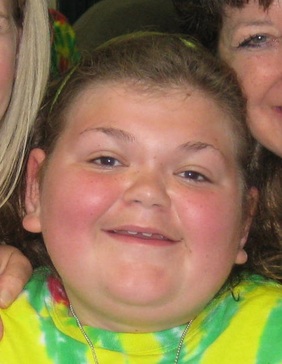
New journal update added April 19, 2007 Hi! I'm Miss Molly. I am a happy 8 year-old, 7 years post-transplant for Hurler Syndrome. This website was developed to share some information with you about Hurler Syndrome and my life. Thanks so much for taking an interest in me, and reading my updates. Please feel free to sign the guestbook. Your support means a lot to my family. Special thanks to Liz and Greg, for their
donation of this site, and to Max, for all of the time he spent creating it for me and my
website-illiterate mom. Also, a big hug to Anne Kennedy, for her amazing talents and huge heart in creating the adorable illustrations for Molly's site. |
Molly's story debuted in the July 16, 2002 issue of Woman's Day magazine. We are so grateful to them for the opportunity to share her story and treatment options with many newly-diagnosed families of MPS1. Please visit their website at www.womansday.com. You can also download the article by clicking here. (Very large Adobe PDF file: 840KB) |
The Wall Street Journal published a story on the decision we faced once Molly was diagnosed. We were very excited about the opportunity to get more information about MPS out into the world. Feel free to read it if you'd like. The PDF file may take some time to download... please be patient. Click here to download the article. (Adobe PDF file: 103KB) |
Molly's Diagnosis |
|
![]() Molly was born a happy, healthy baby (9 lb. 14 oz)on April 19, 2000 by c-section. Upon her arrival, the doctors noticed a slight heart murmur, which was corrected surgically (PDA ligation) at Children's Memorial Hospital, in Chicago, when she was 4 weeks old. Molly continued growing by leaps and bounds, and was continually off the charts for weight, height, and head circumference. In addition to an occasional runny nose, she had one bout of a double ear infection at 6 months. She was a happy little girl...who seemed to be developing normally. At her 6 month check-up, I asked the pediatrician if her vision was checked in the hospital when she was born. With her very thick eyelashes, Molly was tilting her head back and looking at us with her eyes half-closed. I was growing frustrated by people saying, "Ohhh, she looks so tired." This concerned me, so I went to see a pediatric opthamologist. After 3 appointments of struggling to get Molly's eyes dilated, the opthamologist observed some corneal clouding, and suggested I see a geneticist. I didn't think much of it, because she was not alarmed by it. When I asked why a geneticist, she said, "they may be able to tie this to family history." ![]() It was at a December 16th follow-up appointment with her cardiologist (regarding the PDA surgery) that a few more pieces to this puzzle were revealed. While Molly sat on the doctor's table, I asked if her heart could be causing her eyelids to be swollen, forcing her eyes to be "droopy". Almost simultaneously, I noticed a lump protruding from Molly's lower back. This alarmed me, so I brought it to the attention of the cardiologist, who acted immediately in getting an x-ray taken. The x-ray indicated a "slight" curvature of her spine, but the orthopaedic specialist requested more x-rays... of her entire skeletal system. I became increasingly nervous that something serious was wrong, but I was told that some of her bones were showing minor "accumluations". The cardiologist met with me again later in the day, and knowing that I had gotten much more than I bargained for at this "heart check-up", told me to go home, and recommended I see the head of genetics at Children's Memorial Hospital... as soon as possible. On December 18, 2000, my husband John and I were in the office of the aforementioned geneticist, who had the horrible job of telling us Molly's diagnosis. Based on our cardiologist's observations and the skeletal survey, the geneticist took one look at Molly, then age 7 months, and told us she had Hurler Syndrome, a genetic storage disorder. A blood sample taken that day confirmed trace amounts of the enzyme alpha l-Iduronidase. Needless to say, we were devastated upon hearing the news. When I naively asked, "So, what medicine can we give her?", we were told that there is no cure for Hurlers, and that Molly would probably not live to see her 10th birthday. We were told about the treatment option of a bone marrow transplant, which terrified us. We cried for days. A mere week before Christmas, we toiled with how we would tell our families and friends the devastating news about our sweet Miss Molly. |
|
Home | Hurler Syndrome | Recovery | Journal | Photos | Guestbook | Fundraising | Friends | Contact |
